
Cannabis Vanguard — innovation & science by Excellent Nutrients
Light, Spectrum and Physiology: The New Frontier of Professional Cannabis Cultivation
For generations, cannabis cultivation relied on replicating a single light pattern: the sun. However, early artificial lighting installations reproduced the solar spectrum generically, trusting the plant to do the rest. Today, that approach is obsolete.
Research in plant photobiology applied to cannabis has demonstrated that the plant does not merely respond to the quantity of light, measured as PPFD, photosynthetically active photons per square metre per second, but to the quality of the spectrum: which wavelengths it receives, in what proportions, at which moments of the cycle, and for how long.
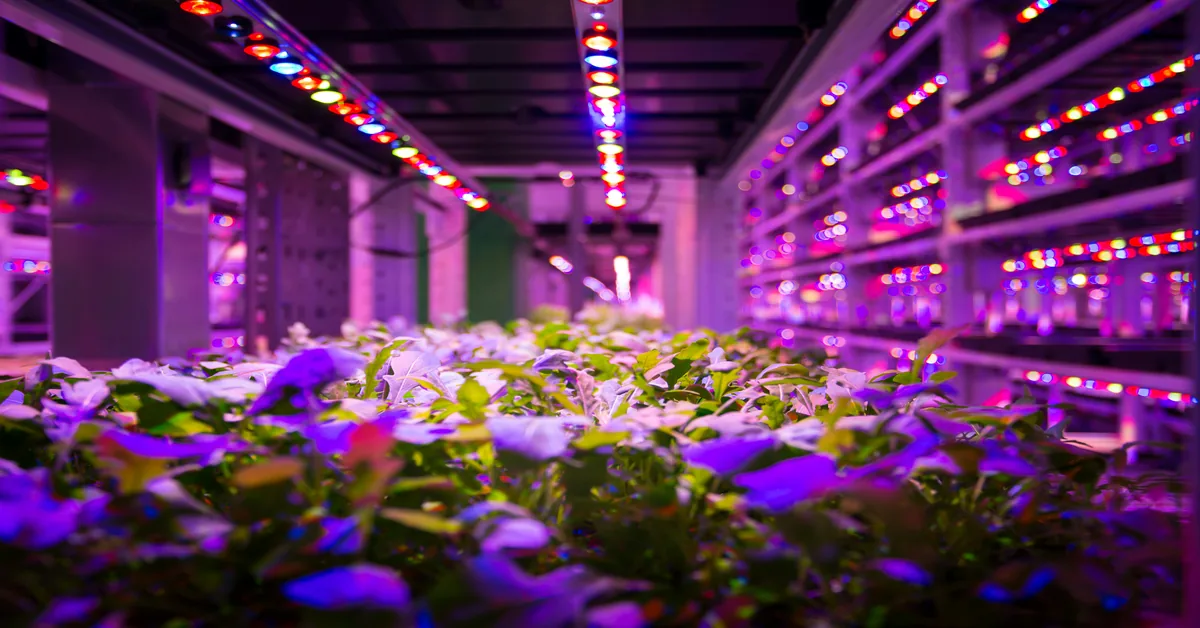
Furthermore, LED technology has been the catalyst of this revolution. Unlike HPS or CMH lamps, modern LED systems allow the design of customised spectra, independent adjustment of intensity per wavelength band, and the programming of spectral variations throughout both the daily cycle and the cultivation period. The result is a level of control over plant physiology that was simply impossible a decade ago.
Therefore, understanding the mechanisms by which light modulates the synthesis of cannabinoids, terpenes and flavonoids is not a technical luxury. It is the foundation of any lighting programme that aims to maximise final product quality in a consistent, reproducible manner.
Photosynthesis and Photoreceptors in Cannabis: Beyond Chlorophyll
Photosynthesis is the most widely known process by which plants convert light energy into chemical energy. Chlorophyll a and chlorophyll b absorb primarily in the red (650–680 nm) and blue (430–450 nm) bands, which offer the greatest photosynthetic efficiency. However, reducing the function of light in cannabis to photosynthesis alone is a simplification that omits physiological mechanisms of enormous productive relevance.
Non-photosynthetic photoreceptors are the key players in the plant’s qualitative response to light:
Phytochromes (PhyA, PhyB): Photoreceptors sensitive to red light (660 nm) and far-red (730 nm). They regulate floral induction in response to photoperiod, internode elongation, stomatal aperture and anthocyanin synthesis. The Pfr/Pr ratio, the proportion between the active and inactive forms of phytochrome, determines whether the plant interprets the environment as long or short days, modulating the vegetative-reproductive transition with extraordinary precision.
Cryptochromes (CRY1, CRY2): Sensitive to blue and UV-A light (320–500 nm). They regulate stem elongation, trichome density, inflorescence compactness and flavonoid synthesis. A deficit of blue light during the vegetative period produces plants with long internodes, sparse trichomes and reduced resin accumulation capacity.
Phototropins (PHOT1, PHOT2): Also sensitive to blue light, they regulate stomatal movement, phototropism and chloroplast distribution within cells. Their activation optimises light capture under high irradiance conditions and reduces photoinhibitory damage.
UV-B receptors (UVR8): A specific photoreceptor for short-wave ultraviolet radiation (280–315 nm). Its activation triggers signalling pathways that increase the synthesis of UV-absorbing flavonoids, hydroxycinnamic acids and, of direct relevance to cannabis cultivation, cannabinoids and terpenes with complex terpenoid profiles. The underlying mechanism is linked to the defensive function of these metabolites against UV stress.
Spectral Design for Maximum Cannabinoid and Terpene Production
Spectral design is today one of the most powerful, and least fully explored, tools in the optimisation of professional cannabis cultivation. The accumulated scientific evidence allows differentiated spectral recommendations to be established for each growth stage.
Vegetative phase: A spectrum enriched in blue (400–500 nm, ideally with a peak at 450 nm) promotes compact plants with short internodes, high trichome density from the earliest weeks and greater stomatal activity. The recommended proportion in this phase is 20–30% blue of total PAR spectrum. The addition of green light (520–560 nm) improves light penetration into the canopy and optimises photosynthetic efficiency in lower leaves, frequently overlooked in simplified spectral designs.
Transition and early flowering: A progressive increase in the proportion of red light (620–680 nm) signals phytochromes to the photoperiod change and accelerates floral induction. A red/blue ratio of 3:1 to 4:1 in the first weeks of flowering has been shown to shorten transition time and homogenise floral primordium formation across plants of the same variety.
Mid and late flowering: The incorporation of far-red (730 nm) in controlled proportions, between 5% and 10% of total spectrum, activates the phytochrome signalling pathway towards its active Pfr form, promoting inflorescence swelling, accelerated resin synthesis and uniform trichome maturation. This band must be used with precision: excess far-red can induce unwanted elongation and reduce cola compactness.
Final phase and maturation: A progressive reduction of total PPFD (from 800–1000 down to 600–700 µmol/m²/s) in the final 1–2 weeks, combined with low-intensity UV-B pulses, promotes maximum cannabinoid accumulation in capitate trichomes and the development of the final terpene profile.
UV Radiation in Cannabis: The Activator of Secondary Metabolites
Ultraviolet radiation is the spectral component with the most extensively documented impact on the synthesis of secondary metabolites in cannabis. Its mechanism of action is linked to the plant’s defensive response to abiotic stress: under UV irradiation, cannabis activates secondary metabolic pathways — particularly the mevalonate pathway and the methylerythritol phosphate (MEP) pathway — increasing the production of terpenoids and cannabinoids as a protective mechanism for reproductive tissues.
From a practical standpoint, the most recent studies distinguish between the effects of UV-A (315–400 nm) and UV-B (280–315 nm):
UV-A (315–400 nm): Increases flavonoid and anthocyanin synthesis, improves inflorescence colouration and has a moderate effect on trichome density. The plant’s tolerance is high and it can be integrated throughout the flowering phase without photoinhibitory damage risk if maintained within moderate ranges (5–15 µmol/m²/s of UV-A).
UV-B (280–315 nm): This is the most potent activator of cannabinoid synthesis. Studies conducted at the University of Mississippi and subsequently confirmed by European research teams have documented increases of up to 28% in THCA content and 35% in total terpenes in plants exposed to controlled UV-B doses during the final 2–3 weeks of flowering, compared to plants grown without UV-B. The most effective protocol consists of daily sessions of 2–4 hours of UV-B exposure (0.5–2 µmol/m²/s), integrated into the central part of the light photoperiod.
UV-B management requires technical precision. Overexposure — particularly with high-intensity UV-B radiation, can cause cellular DNA damage, leaf necrosis and yield reduction. The damage threshold depends on the cultivar, developmental stage and prior acclimation of the plant. LED systems with independent UV-B modules and dimmable channel control are today the reference tool for implementing UV protocols without risk.
PPFD, DLI and Light Efficacy: The Parameters That Define Performance
Optimising lighting in professional cannabis cultivation requires mastery of three fundamental metrics that the industry has been too slow to adopt rigorously.
PPFD (Photosynthetic Photon Flux Density): Measures the quantity of photosynthetically active photons (400–700 nm) reaching the crop surface per unit area and time, expressed in µmol/m²/s. It is the instantaneous light intensity metric. Optimal ranges for cannabis are: vegetative 400–600 µmol/m²/s, early flowering 600–800 µmol/m²/s, full flowering 800–1200 µmol/m²/s (with CO₂ supplementation up to 1500 µmol/m²/s). Above 1500 µmol/m²/s without supplementary CO₂, the plant enters light saturation and excess generates photoinhibition.
DLI (Daily Light Integral): Measures the total quantity of photosynthetically active photons received per unit area over a full day, expressed in mol/m²/day. It is the accumulated daily light dose metric. For cannabis in flowering, the optimal range is 35–65 mol/m²/day. DLI integrates both intensity (PPFD) and photoperiod duration, enabling optimisation of the relationship between electrical consumption and physiological response.
PPE / Photon efficacy (µmol/J): Measures how many photosynthetically active photons a luminaire generates per joule of energy consumed. It is the energy efficiency indicator of the lighting system. The best LED systems currently on the market achieve efficacies of 3.0–3.5 µmol/J, compared to 1.7–2.0 µmol/J for the latest generation of HPS lamps. The difference translates directly into operating costs: a 1,000 m² installation can save between 40,000 and 80,000 kWh per year by migrating from HPS to high-efficiency LED.
Photoperiod and Environmental Control: The Systemic Integration of Lighting
Photoperiod — the relative duration of the light and dark periods in each 24-hour cycle is the primary regulator of the vegetative-reproductive cycle in photosensitive cannabis varieties (Cannabis sativa L. in its short-day phenotypes). Floral induction occurs when the uninterrupted dark period exceeds the cultivar’s critical threshold, typically between 8 and 10 hours.
In professional indoor cultivation, photoperiod control is managed through precision timers and, in advanced installations, through integrated environmental control systems (HVAC + lighting + CO₂) that automatically coordinate light cycles with climate parameters. The colour temperature of light at the end of the photoperiod — the so-called “programmed sunset” — can be modulated to reduce far-red and facilitate the transition to the dark period, minimising the physiological stress of an abrupt change in conditions.
Night interruption with low-intensity red light pulses (the light interruption technique) is a research tool used to delay flowering or extend the vegetative cycle without changing the full photoperiod. In commercial production, its most relevant use is controlling cycle uniformity in chambers with cultivars of differing photoperiodic sensitivity.
To optimize crop performance, it is essential to apply advanced plant nutrition strategies that complement the lighting programme throughout each phase of the growth cycle.
Light Recipes and Cultivation Software: The Intelligence Behind Modern Lighting
The concept of a “light recipe” has emerged as one of the most transformative ideas in professional cannabis cultivation. Just as a nutritional programme defines what the plant receives through its roots, a light recipe defines what it receives through its canopy, and with the same level of precision and intentionality.
A light recipe is a programmed sequence of spectral parameters, intensity values, and photoperiod configurations that varies dynamically throughout the cultivation cycle. Rather than applying a fixed spectrum from day one to harvest, advanced cultivation facilities now programme week-by-week spectral transitions that mirror the natural seasonal shifts a plant would experience outdoors — but optimised, accelerated, and tailored to the specific physiological targets of each cultivar.
Lighting Control Software and Spectral Recipes
Modern lighting control software platforms — such as Priva, Ridder, or proprietary systems from leading LED manufacturers, allow cultivators to programme these recipes with a granularity that was unimaginable a decade ago. Each channel of the LED fixture (blue, green, red, far-red, UV-A, UV-B) can be independently scheduled across every hour of every day of the cycle. The system can automatically adjust intensity in response to real-time environmental sensors, compensating for temperature fluctuations, CO₂ concentration changes, or humidity deviations that would otherwise alter the plant’s photosynthetic response.
The integration of lighting control with climate management systems creates what the industry now calls a closed-loop cultivation environment: a system where every variable is monitored, cross-referenced, and automatically adjusted to maintain the plant within its optimal physiological window at all times. In these environments, the lighting system is no longer a passive infrastructure element, it becomes an active agronomic tool, continuously responding to the plant’s real-time status.
As a result, the practical results of this approach are significant. Facilities operating with programmed light recipes and integrated environmental control consistently report reductions in cycle time of 5–10%, improvements in cannabinoid homogeneity across the canopy of 15–20%, and reductions in energy consumption of 10–15% compared to static lighting programmes — all while maintaining or improving final product quality metrics.
LED vs. HPS vs. CMH: Technical Comparative Analysis for Professional Production
The choice of lighting system is one of the highest-impact economic and productive decisions in the design of a professional cannabis installation. The current market offers three main technologies, each with a differentiated profile of advantages and limitations.
HPS (High Pressure Sodium): The reference technology for decades. Spectrum dominated by yellow-orange (550–620 nm), with good canopy penetration. High heat generation (requires robust cooling systems), photon efficacy of 1.7–2.0 µmol/J, service life of 10,000–20,000 hours. Low initial cost but high operating costs. Fixed spectrum with no customisation capability. In new installations, its use is no longer technically justified.
CMH / LEC (Ceramic Metal Halide): More complete spectrum than HPS, with better blue coverage and natural UV-A presence. Photon efficacy of 1.9–2.2 µmol/J. Generates less heat than HPS at equivalent wattage. Good colour rendering and spectrum closer to solar. A reasonable option for retrofits where the investment in LED is not short-term justified.
Full Spectrum LED: The current reference technology in professional production. Photon efficacy of 2.8–3.5 µmol/J in the best models. Fully customisable spectrum by channel (blue, green, red, far-red, UV). Service life of 50,000–100,000 hours. Reduced heat generation, simplifying crop thermal management. Per-channel dimming capability and spectral recipe programming. Typical ROI versus HPS: 18–36 months in continuous production facilities.
The clear industry trend is complete migration to LED, with intelligent control systems enabling the programming of differentiated spectral recipes by flowering week, cultivar and environmental condition. Reference installations across Europe, Canada and Israel already operate with dynamic lighting protocols that vary spectrum, intensity and photoperiod automatically throughout the entire cycle.
From Cannabis Vanguard — innovation & science by Excellent Nutrients, we will continue exploring how technology, science and innovation are redefining cannabis production and quality in a rapidly evolving industry.