
Agrovisión — magazine of agricultural innovation by Excellent Nutrients
Introduction: what circular economy means for farming
The circular economy seeks to close material cycles within the same productive system. However, in agriculture this concept is still applied unevenly, with very uneven progress across sectors and regions.
Many agricultural by-products are discarded or burned when they could be reintegrated into the production cycle. There is enormous room for improvement in most farming operations.
This room for improvement does not always require large initial investments. Often it is enough to reorganize processes that already exist within the operation to start closing cycles progressively.
At Agrovisión, magazine of agricultural innovation by Excellent Nutrients, we analyze today how to apply circular economy principles to daily agronomic management. We review which by-products hold the greatest recycling potential.
This shift in approach does not depend only on the individual farmer’s willingness. It also requires infrastructure, technical training and, in many cases, collaboration between different actors along the value chain.
Furthermore, this article connects directly with plant nutrition, since many agricultural residues are in fact unused nutrients. This relationship proves key to understanding the real potential of the circular economy.
As a result, we will cover everything from composting to the valorization of agri-food industrial by-products. Each section includes examples applicable from the next campaign.
We also include the most common mistakes we observe when implementing these models in real farming operations. Knowing them in advance saves time and resources during the process.
Additionally, adopting a circular mindset often changes how a farm views its own waste stream entirely. What once looked like a cost center can become, with the right approach, a genuine source of value.
Why agriculture needs to close its nutrient cycles
Mineral fertilizers depend on finite resources such as phosphate rock. However, their extraction proves increasingly costly and geopolitically sensitive, since most reserves are concentrated in very few countries.
Therefore, recycling nutrients from organic by-products reduces dependence on external inputs. This strategy also improves the economic resilience of the farming operation.
Nutrients lost through runoff or leaching contaminate aquifers and watercourses. Closing the cycle within the farm itself also reduces environmental impact.
The European Union is increasingly promoting regulation oriented towards the circular economy in the agri-food sector. This regulatory trend will continue to shape the design of nutrition programs in the coming years.
Mineral fertilizer prices have shown considerable volatility in recent years. Diversifying nutrient sources also protects the operation’s economic margin.
Moreover, this volatility has pushed many growers to reassess their entire input strategy rather than simply reacting to each price spike as it happens. Building nutrient flexibility into the farm plan from the start reduces exposure over the long run.
Composting and harvest residues as a nutrient source
Pruning waste, stubble and harvest discards contain a significant amount of usable nutrients. However, many farmers still eliminate them through burning or removal from the plot.
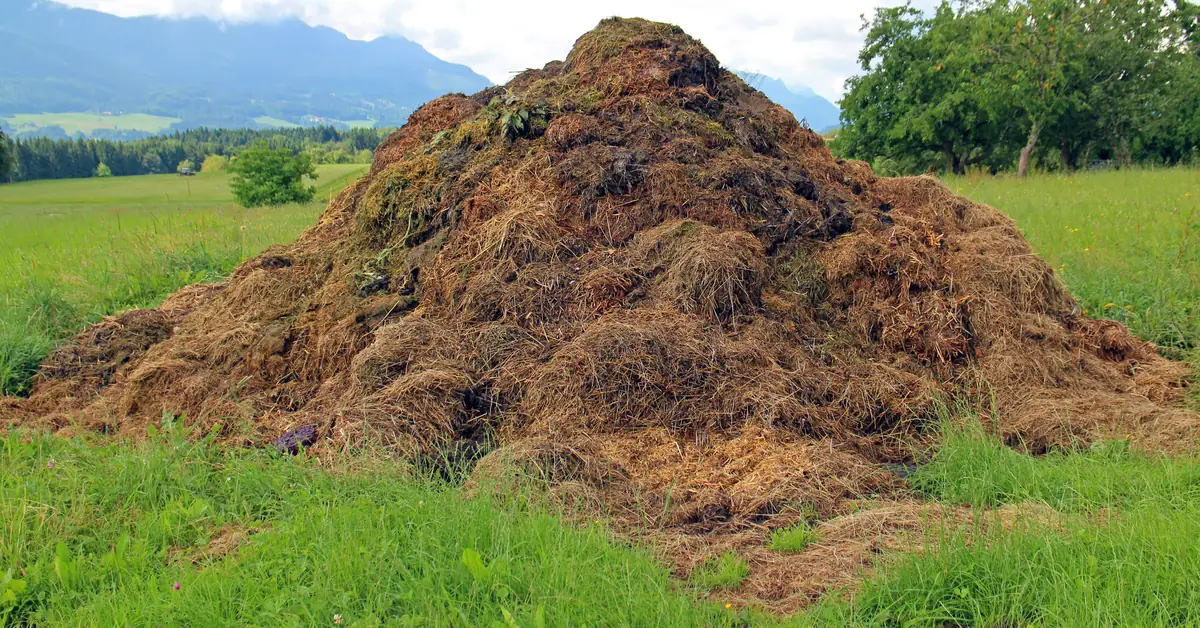
On site composting allows a good part of that nutritional potential to be recovered. This practice also improves soil structure and biological activity.
Well made compost provides stable organic matter that improves water retention over the long term. This improvement proves especially valuable in sandy soils or soils poor in organic matter.
On the other hand, composting requires correct technical management of temperature, moisture and aeration. A poorly managed process can generate nitrogen losses or bad odors.
Turning the compost regularly and monitoring its internal temperature allows deviations to be corrected in time. This simple oversight marks the difference between mature compost and defective compost.
Agro-industrial by-products with fertilizing potential
Many agri-food industries generate nutrient rich by-products that are currently managed as waste. However, some of them present an interesting analytical profile for agricultural use.
Pomace, molasses and olive mill residues can become raw material for biostimulants or organic amendments. This valorization reduces waste management costs for the source industry.
This is precisely the model we apply at Excellent Nutrients with suppliers such as Azucarera de Miranda. We work actively to identify by-products with real agronomic potential.
On the contrary, not all by-products are suitable without a prior stabilization process. Composition analysis and agronomic validation prove essential steps before any commercial use.
Collaborating directly with the source industry facilitates access to by-products with greater regularity and traceability. This closeness also improves the final quality of the input obtained and speeds up the resolution of any incidents.
The role of biostimulants in the circular economy
Many modern biostimulants are obtained from valorized plant or animal by-products. Their production fits naturally within a circular economy model.
Seaweed extracts, for example, make use of marine biomass that would otherwise remain unused. Likewise, some amino acids are obtained through hydrolysis of animal protein from meat industry by-products.
Choosing biostimulants with clear traceability regarding their circular origin adds extra value to the nutrition program. This transparency proves increasingly valued by the professional market.
Furthermore, this approach reduces the carbon footprint associated with manufacturing agricultural inputs. This reduction connects directly with the sustainability goals of many modern operations and with the growing demands of their clients.
Some certifiers and international buyers already look favorably on the use of documented circular origin inputs. This commercial trend reinforces the economic appeal of this type of program.
Advanced plant nutrition programs with a circular approach
At Excellent Nutrients we develop advanced plant nutrition strategies that integrate circular origin raw materials whenever analytical quality allows it. Each formulation responds to a dual criterion of effectiveness and sustainability.
These programs combine macronutrients, micronutrients and biostimulants also selected for their origin traceability. We prioritize suppliers who clearly document the origin of each raw material.
Nutrition based on circular inputs does not compromise agronomic effectiveness if the selection process is rigorous. Sustainability and performance can go perfectly hand in hand.
On the contrary, improvising with by-products without prior validation can generate inconsistent results or even phytotoxicity. Quality control proves non negotiable in any circular nutrition program.
Documenting every batch of circular raw material allows full traceability of the final product to be guaranteed. This documentation proves increasingly demanded by clients, certifiers and export markets.
Water management within the circular model
Drainage water in soilless growing systems contains usable residual nutrients. However, many operations still discard it without any form of recirculation.
Recirculating drainage water reduces both water consumption and fertilizer loss. This practice proves common in well managed professional hydroponic crops.
Modern systems increasingly incorporate sensors that automatically adjust the proportion of recirculated water according to detected conductivity. This automation notably simplifies daily system management and reduces the margin for human error.
Prior treatment of recirculation water prevents the buildup of pathogens or salt imbalances. This technical management requires specific monitoring equipment.
Capturing and reusing rainwater perfectly complements any water focused circular economy strategy. This combination reduces dependence on external water sources.
Installing collection and filtering ponds allows episodes of intense rainfall that would otherwise be lost to runoff to be captured. This infrastructure proves cost effective in the medium term in areas with irregular climate.
Practical cases of circular economy across different crops
In extensive cereal operations, incorporating chopped stubble into the soil returns a significant part of the extracted nutrients. However, this management must be combined with a complementary nitrogen supply.
In greenhouse horticultural crops, composting crop residues reduces waste volume and generates a proprietary amendment. Many operations already have their own on site composting facility.
In woody crops, chopped pruning residues provide organic matter continuously year after year. This practice progressively improves soil structure in long term plantations.
In cut flower and ornamental crops, production discards can be composted together with used organic substrate remains. This combination reduces the volume of waste sent to landfill and generates a good quality proprietary amendment.
Each type of operation requires adapting the circular model to its scale and available resources. There is no single formula applicable to every production context.
In vineyards, composting stems and pomace from the winery itself closes the cycle within the same estate. This practice notably reduces the costs of managing wine industry waste.
In livestock integrated with crop operations, properly treated manure provides an especially complete nutrient source. Livestock and crop integration remains one of the most efficient circular models.
Common mistakes when implementing agricultural circular economy
Many farmers start composting processes without adequate technical control and obtain irregular results. However, a poorly managed process can create more problems than benefits.
Using by-products without prior analysis exposes the crop to contamination or nutritional imbalance risks. The analytical validation phase should never be skipped.
Underestimating the time and labor needed to manage circular processes limits their real adoption. This variable must be planned from the initial design of the system.
Ignoring the regulations applicable to agricultural by-products and waste can create serious legal problems. This variable deserves the same attention as any technical aspect of the process.
Many of these mistakes are avoided simply by dedicating time to the design phase before executing any circular process. This prior planning saves both costs and headaches later on.
Having specialized technical advice during the initial phase significantly reduces the learning curve. This initial investment usually pays off within the first application campaigns.
Economic benefits of agricultural circular economy
Reducing dependence on external mineral fertilizers protects margin against international price volatility. The circular economy also works as an economic risk management strategy.
Valorizing by-products that previously generated a management cost turns them into a resource with added value. This transformation directly improves the operation’s bottom line, even in smaller operations or those with limited resources.
Many administrations offer specific grant lines for circular economy projects in the agri-food sector. It is worth checking available calls before dismissing an investment because of its apparent initial cost.
Export markets increasingly value sustainability certifications linked to circular models. This strategy can open additional commercial doors in the medium term.
Beyond the direct savings, farms that document their circular practices well often find those records useful for far more than compliance. Buyers, certifiers and even local authorities increasingly ask for exactly this kind of traceability.
Economic value also comes from improving how resources are measured and assigned within the operation. Recording the volume, composition and destination of each by-product makes it easier to compare management costs with the value recovered through reuse.
These records help farmers decide which processes deserve to be expanded and which ones still need technical adjustment. They can also support investment decisions by showing whether a composting area, a water recovery system or a new storage facility is producing measurable returns.
When this information is reviewed campaign after campaign, circular management becomes part of normal business planning rather than an isolated environmental initiative.
The farm gains a clearer picture of its material flows, identifies avoidable losses earlier and can prioritize the actions with the greatest agronomic and economic impact.
Clear records also make it easier to communicate results to partners, customers and certifiers, demonstrating that the circular approach produces practical improvements instead of remaining only a general sustainability commitment.
Conclusion: towards a more efficient and circular agricultural model
The circular economy is not a passing trend, but a logical response to resource scarcity. However, its implementation requires technical planning and analytical rigor.
Farmers who integrate these principles progressively reduce costs and improve their production resilience. Therefore, starting with small, measurable steps, and expanding only once results confirm the approach, remains the safest strategy.
Advanced nutrition acts as a natural bridge between the circular economy and real agronomic performance. This integrated vision will continue to shape agriculture in the coming decades.
Every step towards a more circular model simultaneously reduces environmental impact and exposure to input price volatility. This double advantage explains why more and more operations are moving in this direction.
It is not necessary to transform the entire operation at once to start getting results. A well measured pilot project, applied to a single plot or product line, allows the model to be validated before scaling it up.
From Agrovisión, magazine of agricultural innovation by Excellent Nutrients, we will continue exploring how technology, science and innovation are redefining the future of modern agriculture.