
Cannabis Vanguard – innovation & science by Excellent Nutrients
Introduction: why automate professional cannabis cultivation
Cannabis automation has stopped being a luxury reserved for large operations and become a competitive necessity. However, many growers still do not know where to start implementing it.
Automating does not mean removing the human team, but freeing up technical time for tasks that truly require expert judgment and direct observation. Technology should be understood as a support tool, not a total replacement.
At Cannabis Vanguard, innovation & science by Excellent Nutrients, we explore the main automation technologies available for professional cultivation. We review how to prioritize investment according to the size and objective of each operation.
This article connects technology with plant nutrition, since many automated systems revolve precisely around daily fertigation. This relationship helps establish investment priorities.
We will cover everything from automated irrigation to environmental monitoring, data and cybersecurity systems. Each section provides information applicable from the next investment cycle.
We also include the most common mistakes made when automating without a clear strategy. Knowing them in advance avoids costly investments with disappointing returns.
Each section combines the technical workings of the technology with practical field implementation recommendations. This structure helps each operation establish its priorities.
Beyond the equipment itself, automation success usually comes down to sequencing. Growers who automate the fundamentals first, then layer in more advanced systems, consistently get further than those who buy everything at once.
Automated fertigation: the foundation of any technology system
Automated fertigation systems dose water and nutrients according to programmed parameters or real time sensors, without constant manual intervention. They usually represent the logical first step in any automation process.
These systems allow different nutritional recipes to be programmed according to the phenological phase without daily manual intervention from the team. This capability reduces dosing errors.
The most advanced systems automatically adjust irrigation according to electrical conductivity and pH readings from the drainage detected. They keep the system within optimal ranges almost autonomously.
Integrating automated fertigation with substrate moisture sensors allows for irrigation that is truly reactive to the plant’s real needs. This precision improves both yield and efficiency in resource use.
Some systems automatically log every irrigation event carried out, generating a detailed history without extra effort from the technical team. These records support audits of water and nutrient consumption.
Automated climate control: temperature, humidity and CO2
Automated climate systems regulate temperature, relative humidity and CO2 levels in a coordinated, continuous way. They keep VPD within optimal ranges without the need for constant manual adjustments.
These systems allow specific environmental curves to be programmed for each stage of cultivation, from cloning to final harvest. This detailed programming improves consistency between successive cycles.
A poorly calibrated climate system can generate sudden fluctuations that are more harmful than careful, constant manual control. Initial calibration and periodic maintenance are as important as the technology itself.
The most advanced systems incorporate automatic alerts for out of range deviations, allowing a fast response from the technical team. Early warnings reduce losses from undetected failures.
Some systems allow remote control via mobile app, facilitating supervision outside normal working hours. This accessibility is especially valuable during critical crop phases, such as late flowering.
Smart lighting and programmable spectra
Programmable LED lighting systems allow both intensity and light spectrum to be adjusted according to the cycle’s phenological phase. They optimize energy consumption without compromising crop development.
Some systems automatically adjust light intensity according to ambient temperature, avoiding heat stress on especially hot days. This integration between lighting and climate improves the overall stability of the system.
Programming specific spectra for the final weeks of flowering can significantly boost trichome and aromatic terpene production. This technology connects directly with the final quality objectives of the product.
Monitoring the real energy consumption of the lighting installation allows savings opportunities to be identified without sacrificing results. This information is especially valuable in large scale operations with significant energy costs.
Some manufacturers already integrate artificial intelligence to automatically adjust the spectrum according to the phenological state detected through vision cameras. This still emerging technology promises to further simplify lighting management in the coming years.
Monitoring and real time data collection
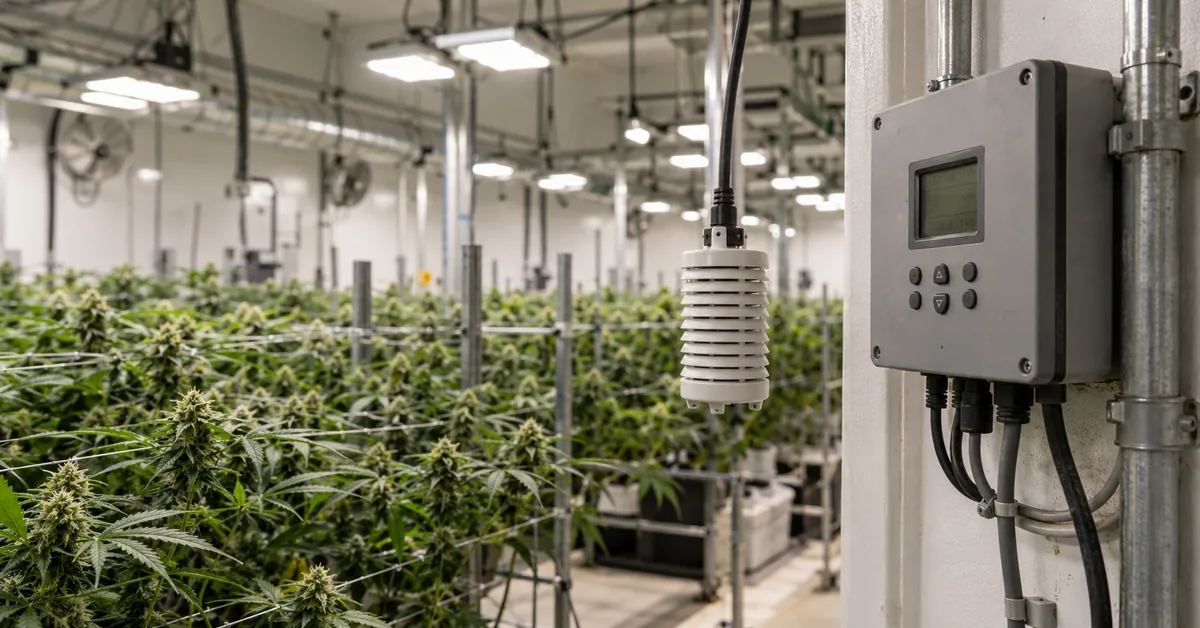
Connected sensor systems allow continuous recording of variables such as temperature, humidity, CO2 and substrate electrical conductivity. They generate a useful data history for decision making.
Centralizing all this data on a single platform makes it easier to identify correlations between environmental variables and final harvest results. This integrated view is more useful than reviewing each parameter in isolation.
Some platforms already incorporate predictive models that anticipate problems before they visually manifest in the real crop. This predictive capability represents the most advanced frontier of currently available technology.
Exporting and analyzing this data between complete cultivation cycles allows the real impact of each agronomic adjustment introduced to be compared. This traceability turns every harvest into an opportunity for systematic learning.
Sharing this data with nutrition suppliers or specialized external consultants facilitates more precise diagnoses and better founded recommendations. This collaboration based on real data improves the quality of the technical advice received.
Plant nutrition and precision dosing systems
Automated dosing systems allow nutritional recipes to be applied with a precision difficult to match manually and consistently. They reduce variability between applications and improve the consistency of the final result.
Integrating conductivity and pH sensors into the dosing system itself allows automatic corrections in real time. Immediate adjustment is particularly valuable in hydroponic systems sensitive to rapid deviations.
Automating nutrition does not eliminate the need for qualified technical supervision. Agronomic judgment remains irreplaceable for interpreting the data generated by the system.
Some dosing programs allow proportions to be automatically adjusted according to predefined nutritional curves by phenological phase of the crop. This function reduces the team’s operational workload.
Advanced plant nutrition programs compatible with automation
At Excellent Nutrients we develop advanced plant nutrition strategies designed to integrate easily into modern automated dosing systems. Each program adapts to the format and compatibility of the equipment used.
These systems combine macronutrients, micronutrients and biostimulants in stable formulations, suitable for automatic injection systems. They consider chemical compatibility between products to avoid unwanted precipitation within the overall system.
Well designed nutrition for automation considerably simplifies daily operations without sacrificing agronomic precision. This technical compatibility is as relevant as the nutritional effectiveness of the program itself.
Forcing products not designed for automatic dosing into these systems can generate clogging or precipitation. Verifying technical compatibility before automating any program is an essential step.
Practical cases by operation size
In small or advanced hobby level operations, automating irrigation and basic climate control offers the best initial return. However, investment in advanced sensors can wait for later growth phases.
In medium sized operations, integrating fertigation and climate control on a centralized platform significantly improves the technical team’s daily operational efficiency. This integration usually represents the next logical investment step.
In large scale operations, predictive systems and data analysis become a real competitive advantage. These operations usually justify more sophisticated technology investments given the production volume achieved.
Each level of automation must be justified by a clear, measurable return on investment. Technology for technology’s sake, without a specific agronomic or economic objective, is rarely profitable.
Cybersecurity and operational continuity in automated systems
An automated system depends on stable connectivity and a well protected digital infrastructure against failures. Cybersecurity should form part of any automation plan from the outset.
An electrical or connection failure without a contingency plan can leave the crop without irrigation or climate control during critical hours of the cycle. This vulnerability demands backup systems, such as generators or SMS alerts, in any serious installation.
Keeping backups of configurations and nutritional recipes avoids losing months of fine tuning after a serious system failure. This simple practice should form part of the standard maintenance protocol.
Limiting remote access to authorized personnel and keeping software updated reduces the risk of unwanted intrusions into the system. This aspect gains relevance as more operations depend on connected systems.
Testing backup power and failover systems periodically, rather than assuming they will work when needed, catches gaps before a real emergency does. This kind of drill costs little time but prevents very expensive surprises.
Common mistakes when automating cultivation
Many growers invest in advanced technology without first solving basic agronomic management problems in the crop. However, automation amplifies both the successes and the existing mistakes in the system.
Blindly trusting technology without periodic human supervision can allow a failure to go completely unnoticed during critical hours. Automation must complement, never replace, direct observation of the crop.
Not adequately training the technical team in the use of new systems seriously limits the expected return on technological investment. Training matters as much as equipment quality.
Underestimating the periodic maintenance of sensors and automated equipment causes progressive deviations that are difficult to detect in time. Maintenance deserves the same attention as other technical tasks.
Calibrating sensors periodically, following manufacturer guidelines, avoids agronomic decisions based on slightly incorrect data. This maintenance routine tends to be neglected precisely in the operations that depend most on its readings.
Choosing incompatible technology between different manufacturers creates data islands that do not communicate correctly with each other. Planning the complete technology architecture before buying equipment avoids costly integration problems later on.
Keeping records of every breakdown helps identify patterns and anticipate future failures in similar equipment within the same facility. This documentation is especially valuable in operations with multiple rooms or facilities.
Vendor selection, long term support and scaling automation
Choosing an automation vendor is as much a long term partnership decision as it is a purchase. Support quality and speed should matter as much as equipment price.
Favoring vendors with a proven track record in cannabis specifically, rather than generic greenhouse automation, usually avoids compatibility surprises down the line. Industry experience reduces configuration problems during setup.
Checking whether spare parts and software updates remain available years after purchase protects the investment from premature obsolescence. Asking about a manufacturer’s support roadmap before signing a contract deserves the same scrutiny as any technical specification.
Requesting references from other growers already using the same system provides insight that no product brochure can match. Peer feedback reveals limitations before purchase.
An automation strategy designed for today’s operation should also anticipate tomorrow’s scale, at least in broad terms. Choosing modular systems that can expand without a full replacement saves significant cost as the business grows.
Standardizing data formats and communication protocols from the start makes it much easier to add new rooms or facilities later without rebuilding the entire monitoring infrastructure. This foresight helps when growth exceeds expectations.
Conclusion: towards ever smarter professional cultivation
Automation does not replace agronomic judgment, but it does enhance it notably when implemented correctly. However, its success always depends on a clear, well planned strategy.
Growers who integrate technology, data and advanced nutrition in a coordinated way achieve much more consistent results cycle after cycle. Technological investment should be understood as part of a system, not as isolated solutions.
Advanced nutrition acts as the central piece of any well designed, coordinated automation strategy. This integrated vision will continue to shape professional cannabis cultivation in the coming years.
The most advanced technology never compensates for a flawed underlying agronomic decision, it only executes it with greater precision and consistency. The correct order always starts with agronomic knowledge and ends with the tool that carries it out.
Investing progressively and measuring each step allows a solid system to be built without compromising the operation’s cash flow. Financial prudence matters as much as technical decisions.
Ultimately, every automated layer added should answer a specific question the grower already had, rather than being installed simply because it is available. Systems chosen this way tend to earn back their cost, while those chosen for novelty rarely do.
From Cannabis Vanguard, innovation & science by Excellent Nutrients, we will continue exploring how technology, science and innovation are redefining cannabis production and quality in a rapidly evolving industry.