
Agrovisión – magazine of agricultural innovation by Excellent Nutrients
Introduction: a silent problem growing on many farms
Soil salinity affects millions of cultivable hectares worldwide, across different continents and climates. However, many farmers only detect it once yield has already dropped.
Irrigation with water of limited quality and poor drainage accelerate the accumulation of salts in the soil profile. This problem is common in arid and semi arid areas, as well as coastal zones under water resource pressure.
At Agrovisión, magazine of agricultural innovation by Excellent Nutrients, we examine how to diagnose and manage soil salinity effectively. We review which nutrition strategies help mitigate its impact on final yield.
This article connects directly with water management, since both factors are closely related in practice. This relationship is central to understanding salinity.
We will cover everything from initial diagnosis to long term management strategies. Each section offers guidance for the next growing season.
We also include the most common mistakes that worsen salinization unnoticed. Recognizing them helps prevent decisions that worsen the problem.
Finally, salinity is not always irreversible, and many operations have managed to recover degraded soils with proper management. This article aims to offer a practical path towards that recovery.
Many necessary tools already exist and are accessible to most farms. The challenge is timely diagnosis and consistent application of the appropriate strategy.
Beyond the technical fixes, salinity management is also fundamentally a record keeping habit. Farms that track water and soil data over years spot trouble long before yield tells them something is wrong.
How salinity originates in agricultural soil
Irrigation water contains dissolved salts, even when its quality is considered good. However, these salts accumulate progressively if there is not enough leaching of the profile.
Poor drainage prevents leaching water from carrying salts out of the root zone. This accumulation is problematic in clay soils or soils with compacted layers.
A well drained soil allows salts to move to deeper layers with each irrigation. The design of the drainage system is as important as the quality of the water used.
Overexploitation of coastal aquifers can cause saline intrusion and progressively degrade the quality of available irrigation water. This threat increasingly affects more coastal farming areas in different regions.
In irrigation with treated wastewater, water salinity tends to be higher than in conventional sources. This factor must be specifically considered when designing the irrigation and nutrition program.
Diagnosis: how to detect salinity in time
The electrical conductivity of the soil’s saturation extract constitutes the most reliable indicator for diagnosing salinity. Periodic laboratory analysis is essential for preventive management.
Visual symptoms such as burnt leaf edges or reduced growth usually appear once the problem is already advanced. This late sign explains why preventive analysis is so valuable.
Regularly measuring the electrical conductivity of irrigation water allows problems to be anticipated before they affect the soil. This simple practice should form part of the standard protocol of any operation.
Mapping salinity variability within the same plot using portable sensors helps identify higher risk zones. This information helps prioritize interventions.
Comparing soil analyses from different years allows trends to be identified before the problem becomes critical. Historical records complement individual analyses.
Impact of salinity on plant nutrition
High salinity hinders water absorption by the root, even when the soil is moist. Plants suffer physiological water stress similar to that of real drought.
Certain ions present in excess, such as sodium and chloride, are directly toxic to many sensitive crops. This toxicity adds to the general osmotic stress that salinity produces.
Excess sodium also displaces other essential cations such as calcium and magnesium in the exchange complex. Salinity usually generates secondary nutritional imbalances in addition to direct stress.
Salinity reduces soil biological activity, indirectly affecting nutrient availability. This reduction in microbial activity worsens the problem over time.
Some crops have their own physiological mechanisms for salt tolerance, such as active sodium exclusion at the root level. This genetic variability explains why varietal choice also forms part of the management strategy.
Irrigation management strategies against salinity
Leaching irrigation, applied periodically, moves accumulated salts to deeper layers of the profile. This practice is essential in areas with limited quality irrigation water.
Calculating the required leaching fraction using water quality and crop tolerance improves the efficiency of this practice. Planning prevents water waste and insufficient leaching.
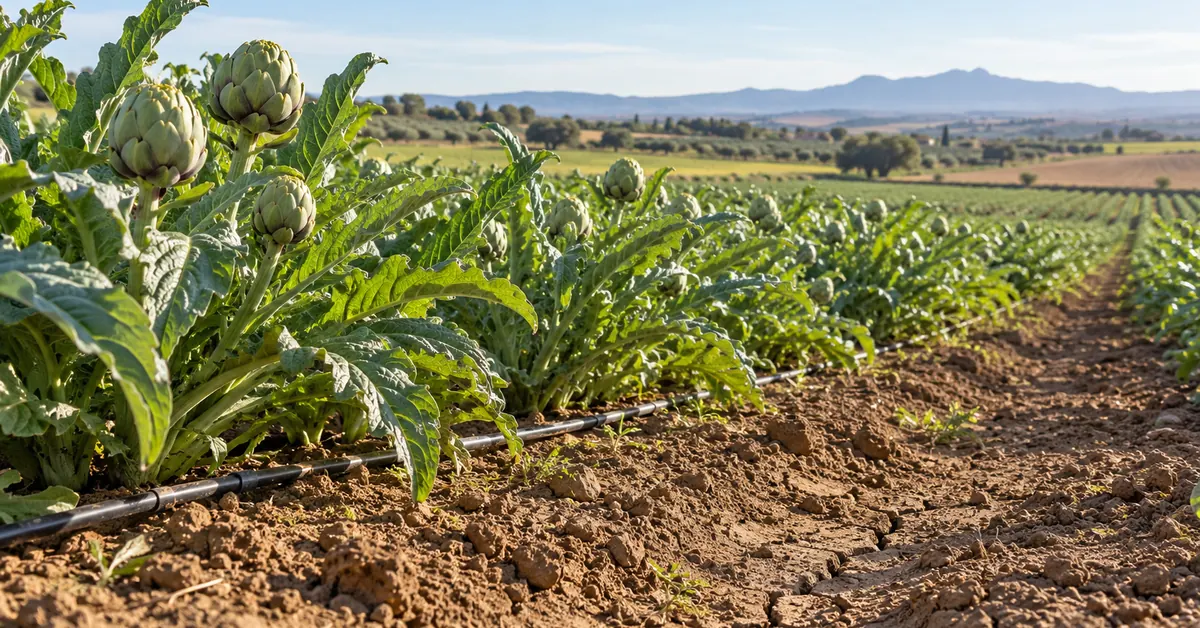
Drip irrigation reduces surface salt accumulation compared to sprinkler or gravity irrigation. Many operations have shifted towards this system in salt risk areas.
Scheduling irrigation according to the crop’s real evapotranspiration avoids both water deficit and excess, both harmful in the face of salinity.
Irrigating at night or during hours of lower evaporation reduces the progressive concentration of salts at the soil surface.
Amendments and correctors for salt affected soils
Agricultural gypsum provides calcium that displaces sodium from the exchange complex, facilitating its subsequent leaching. It is one of the most widely used correctors in sodic soils.
Organic matter improves soil structure and its drainage capacity, complementing the effect of mineral amendments. This combination is more effective than any corrector applied in isolation.
Applying amendments without a prior diagnosis can generate disappointing or even counterproductive results. Soil analysis must always precede any correction decision.
Selected biostimulants improve the plant’s physiological tolerance to salt stress. This strategy complements, without replacing, soil and water management measures.
Applying amendments at the right point in the cycle, generally before sowing or planting, maximizes their effectiveness. Timing can be as important as dosage.
Plant nutrition in soils with high salinity
Balanced nutrition, with special attention to calcium and potassium, improves the plant’s tolerance to salt stress. Adjusting the nutritional program is key on affected operations.
Calcium strengthens cell membrane integrity, reducing the impact of ionic toxicity. Its regular supply is especially recommended in soils with sodicity problems.
Some high salt index fertilizers worsen the problem if applied without considering the soil’s baseline salinity. Choosing low salt index formulations is essential in these contexts.
Amino acid and seaweed extract based biostimulants improve the plant’s physiological response to osmotic stress. This advantage is especially valuable during the most sensitive phases of the cycle.
Potassium competes favorably with sodium at the root absorption level when kept at adequate levels. A sufficient potassium supply works as an additional physiological barrier against salinity.
Advanced plant nutrition programs for saline soils
At Excellent Nutrients we develop advanced plant nutrition strategies specifically adapted to crops with salinity problems. Each program considers the electrical conductivity of soil and irrigation water.
These programs combine low salt index macronutrients, chelated micronutrients and specific biostimulants against osmotic stress. They consider crop type and salinity tolerance.
Well calibrated nutrition reduces the productive impact of salinity without needing to fully resolve the underlying problem. This strategy delivers visible results even while longer term corrections are being applied.
Ignoring salinity when designing the nutrition program seriously limits the results obtained. Saline diagnosis must always be integrated into the design of any nutritional plan.
Coordinating the nutrition program with the leaching irrigation strategy supports both measures. This coordination is more effective than applying each strategy in isolation.
Practical cases by crop type and area
In greenhouse horticultural crops with drip irrigation, strict control of water electrical conductivity is especially critical. However, these systems also allow more precise management of leaching irrigation.
In extensive crops in semi arid areas, subsurface drainage through perforated pipes can be a profitable investment. This infrastructure deserves evaluation on operations with persistent salinity.
In woody crops such as olive, a certain natural tolerance to salinity allows moderate levels to be managed without severe yield losses. This tolerance varies notably depending on the rootstock used.
Each combination of crop, soil and water quality requires a specific, personalized management strategy. There is no universal solution applicable to every production context.
In grapevines, some rootstocks offer significantly greater salinity tolerance than others. Rootstock choice should be considered from the planning stage of any new plantation.
In orchards already established, changing to compatible salt tolerant rootstocks is rarely practical, which makes the initial planning decision even more consequential. Getting this choice right from the start avoids a problem that later management can only partially compensate for.
Common mistakes when managing saline soils
Many farmers apply more fertilizer when facing stress symptoms, confusing them with a simple nutritional deficiency. However, this practice can significantly worsen the underlying problem.
Irrigating less frequently to save water without considering the need for leaching worsens salt accumulation in the profile. Water savings must be planned without compromising this essential function of irrigation.
Ignoring irrigation water quality for years without periodic analysis delays detection of the problem. Water quality requires ongoing monitoring, especially in areas with variable water sources.
Applying generic amendments without a specific diagnosis of the type of salt problem present reduces the effectiveness of the investment made. Diagnosis deserves the same attention as other management decisions.
The common mistake is acting without sufficient data. Regularly repeated soil and water analysis avoids much of this problem.
Conclusion: towards productive soils despite salinity
Soil salinity represents a growing challenge, but one that is manageable with the right tools. However, its management requires early diagnosis and a coordinated technical approach.
Farmers who coordinate irrigation, amendments and nutrition can maintain productivity on affected soils. An integrated view is more effective than any isolated solution.
Advanced nutrition acts as a key complementary tool while structural soil problems are being resolved. This approach will shape future agronomic management in arid areas.
Every analysis carried out, every irrigation adjustment and every correction applied adds up to a recovery strategy built step by step. Such persistence supports the recovery of degraded soil.
The operations that treat salinity as an ongoing variable to monitor, rather than a one time problem to solve, tend to fare best over multiple seasons. This shift in mindset often matters as much as any single technical intervention.
Building a monitoring routine that catches problems early
A consistent monitoring routine turns salinity from an occasional crisis into a manageable, predictable variable. Setting a fixed schedule for soil and water testing matters more than the sophistication of any single test.
Keeping a simple spreadsheet or logbook of electrical conductivity readings over time reveals trends that a single snapshot never could. This habit costs almost nothing and often provides more value than expensive one time diagnostic campaigns.
Involving the whole field team in basic salinity awareness, not just the agronomist, improves early detection significantly. Workers who notice subtle leaf changes during daily tasks can flag problems weeks before formal testing would catch them.
Pairing salinity monitoring with irrigation water source tracking helps identify exactly when and why conductivity spikes occur. This connection supports future decisions.
Many regional agricultural extension services offer free or subsidized soil testing, and taking advantage of these resources removes a common barrier to regular monitoring. Cost should rarely be the reason a farm skips this basic diagnostic step.
Financial planning for salinity remediation
Salinity remediation requires investment and benefits from a budget covering several seasons. Phasing gypsum applications, drainage improvements and irrigation upgrades can make expenditure easier to manage.
Calculating the yield loss currently caused by salinity provides a clear baseline against which to measure the return on any remediation investment. Even an estimate helps justify the budget.
Some regions offer specific agricultural funding programs aimed at soil recovery and irrigation efficiency, and identifying these opportunities can significantly reduce the farmer’s own capital outlay. Checking with local agricultural authorities before starting a large scale correction plan is always worthwhile.
Prioritizing the most affected zones within a farm, rather than attempting a uniform treatment across the whole property, typically delivers a better return per euro invested. Targeting directs limited resources towards priority areas.
Reviewing budgets against seasonal conductivity trends keeps expenditure aligned with field conditions. This prevents overspending on improved zones while neglecting deteriorating areas.
From Agrovisión, magazine of agricultural innovation by Excellent Nutrients, we will continue exploring how technology, science and innovation are redefining the future of modern agriculture.